Discover
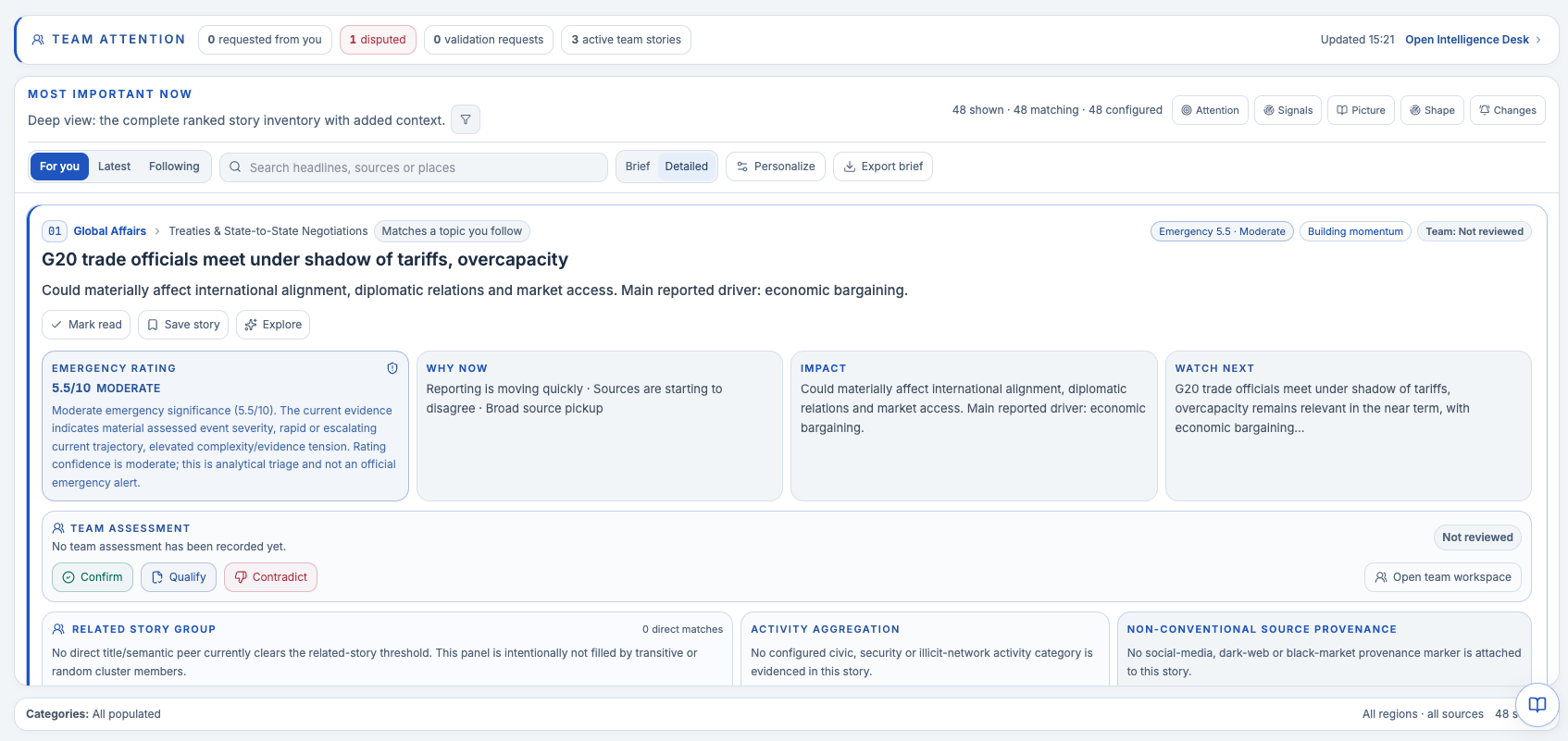
Continuously retrieve relevant news, press releases, blogs and public web reporting using semantic and taxonomy-driven search.
QRMonitor.ai gives organizations two connected ways to understand a changing world: an OSINT Monitor for discovering and verifying public-source information, and an Event Intelligence Monitor for converting observations into correlated events, warnings, scenarios and operational actions.
The two-monitor model gives analysts a transparent source view and decision-makers a concise event view. Both operate on the same governed data foundation.
Continuously retrieve relevant news, press releases, blogs and public web reporting using semantic and taxonomy-driven search.
Inspect original sources, publication time, language, relevance, duplication and corroboration before accepting a claim.
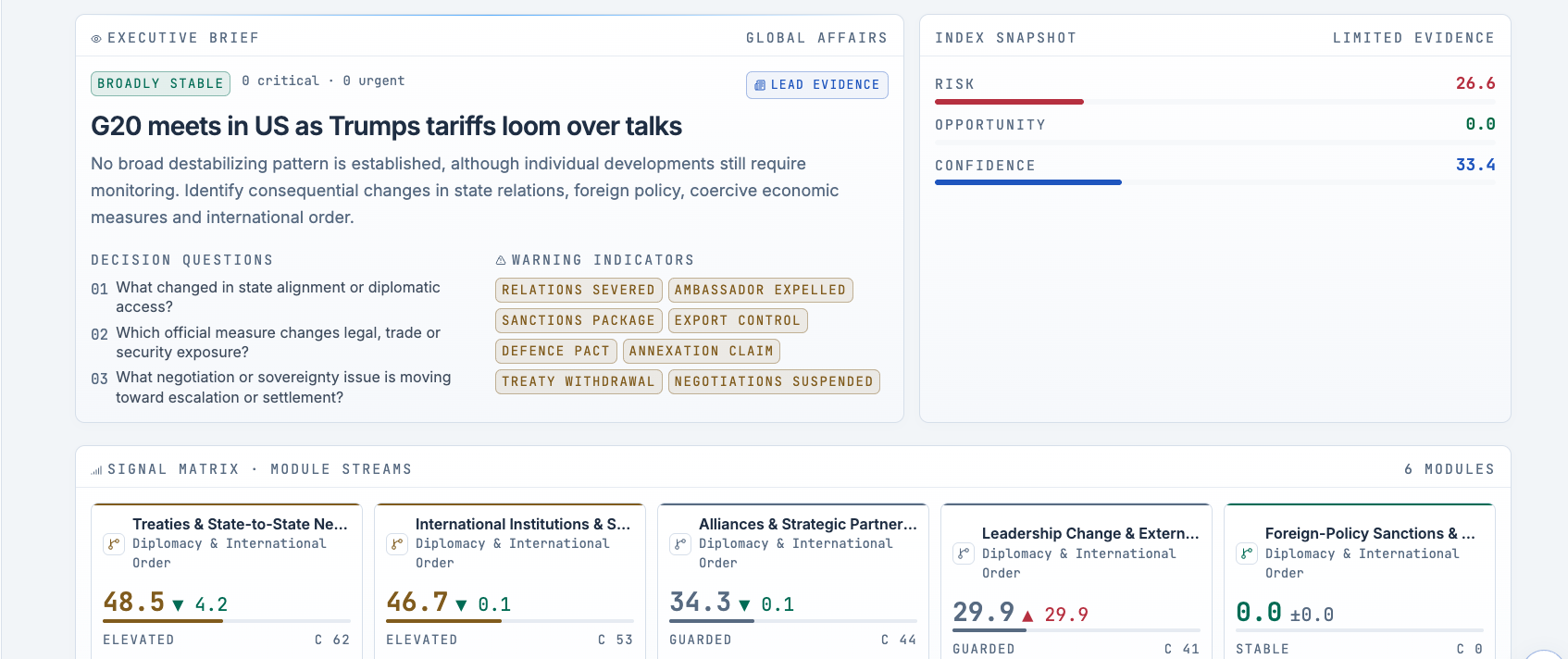
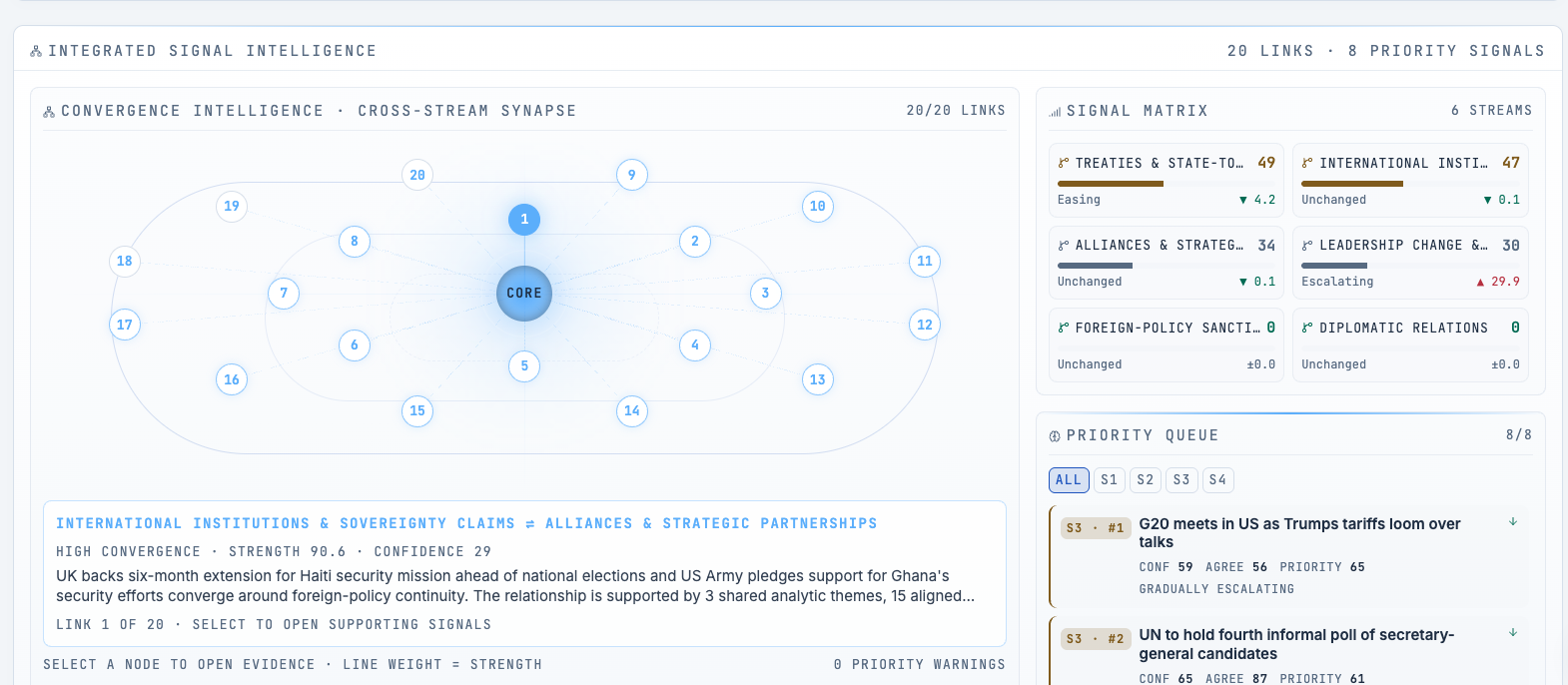
Link related observations into persistent events with severity, trajectory, confidence, impact and cross-stream convergence.
Receive a crisp decision brief, warning indicators, scenarios, intelligence gaps and evidence-backed operational actions.
Use the OSINT Monitor when the task is discovery, coverage and source validation. Use Event Intelligence when the task is prioritization, warning and action.
A continuous public-source monitoring environment for finding what is being reported, where the reporting is coming from, how the narrative is changing and which evidence deserves analyst attention.
Identify relevant developments, source activity, new themes, changes in volume and emerging information gaps.
Government desks, research teams, corporate intelligence, strategic communications, security and risk functions.
Source observations, event clusters, monitoring feeds, change summaries, source profiles and exportable evidence packs.
A role-based indications, warning and decision-support environment that turns fragmented observations into persistent events, cross-stream relationships, priority warnings and operationally useful assessments.
Separate routine reporting from events that are accelerating, converging, spreading or creating material exposure.
Situation rooms, intelligence units, law enforcement, crisis teams, enterprise risk and individual decision-makers.
Priority warnings, command briefs, scenario signposts, operational actions, watchlists and source-linked assessments.
The products are complementary rather than duplicative. The distinction is the analytical unit and the decision being supported.
Each observation is assigned to one primary domain and one primary sub-category. Cross-domain relevance is preserved as relationship metadata rather than duplicated content.
Diplomacy, policy, elections, sanctions, alliances and international relations.
Armed conflict, attacks, terrorism, violent unrest, border tensions and ceasefires.
Earthquakes, floods, storms, wildfires, drought, extreme temperatures and hazards.
Markets, inflation, trade, corporate developments, supply chains and financial stress.
Disease outbreaks, biosecurity, health systems, medical supply and public-health policy.
Cyber threats, vulnerabilities, AI developments, infrastructure and digital disruption.
Borders, aviation, maritime movement, transport disruption, migration and travel controls.
Energy supply, climate policy, resource pressure, environmental incidents and transition risk.
Displacement, food insecurity, aid access, civilian protection and essential-service stress.
Governance, public sentiment, peaceful protest, institutions, rights and social stability.
Both monitors run on the same collection, retrieval, analysis and publication foundation, allowing users to switch views without losing context or provenance.

QRMonitor separates the source layer from the event-assessment layer while keeping them technically and evidentially connected.
The same underlying events are presented through role-specific portfolios, decision questions and operational actions.
National security, economic resilience, public safety, governance stability, borders and strategic logistics.
Strategic developments, conflict, cyber, influence, economic statecraft and intelligence gaps.
Violence, extremism, organized crime, fraud, cybercrime, border risk and protective security.
Geopolitical exposure, markets, supply chains, cyber, technology, climate and business continuity.
Trading, travel, marketing, technology and global disruption monitoring in an accessible view.
QRMonitor does not detach conclusions from their evidence. Users can inspect why an event was prioritized and which sources support or contradict it.
Every event can expose its underlying observations, independent-source count, publication time, relevance, agreement, contradictions and source concentration.
Select a use case to see how the two products work independently or together. Each card expands with the operating requirement and decision output.
Detect new topics, narrative shifts, source amplification and changes in reporting before they dominate the information environment.
Maintain a current, source-linked view of a country, organization, leader, supplier, competitor or strategic issue.
Prioritize events that may affect national security, public safety, economic stability, critical infrastructure or cross-border operations.
Understand whether external events are likely to affect assets, suppliers, markets, travel, workforce or commercial decisions.
Use public-source discovery to identify observations, then convert related reporting into assessed threats, entities, locations and incident patterns.
Track public reporting while receiving concise event intelligence on market movement, disruption, travel conditions and consumer narratives.
Deploy both products together or activate only the monitor required by the client. Infrastructure, storage, models, refresh intervals, sources and notification channels remain configurable.
Tell us whether your priority is public-source discovery, event-level warning and decision support, or an integrated deployment containing both.